Scope Comparison
DWARF 3 vs DWARF Mini
Same target, same sky, same night. Drag the slider to see how two different smart telescopes render the Monkey Head Nebula from a Bortle 4 site in the New Forest.
NGC 2174 · Monkey Head Nebula · Orion · ~6,400 light-years
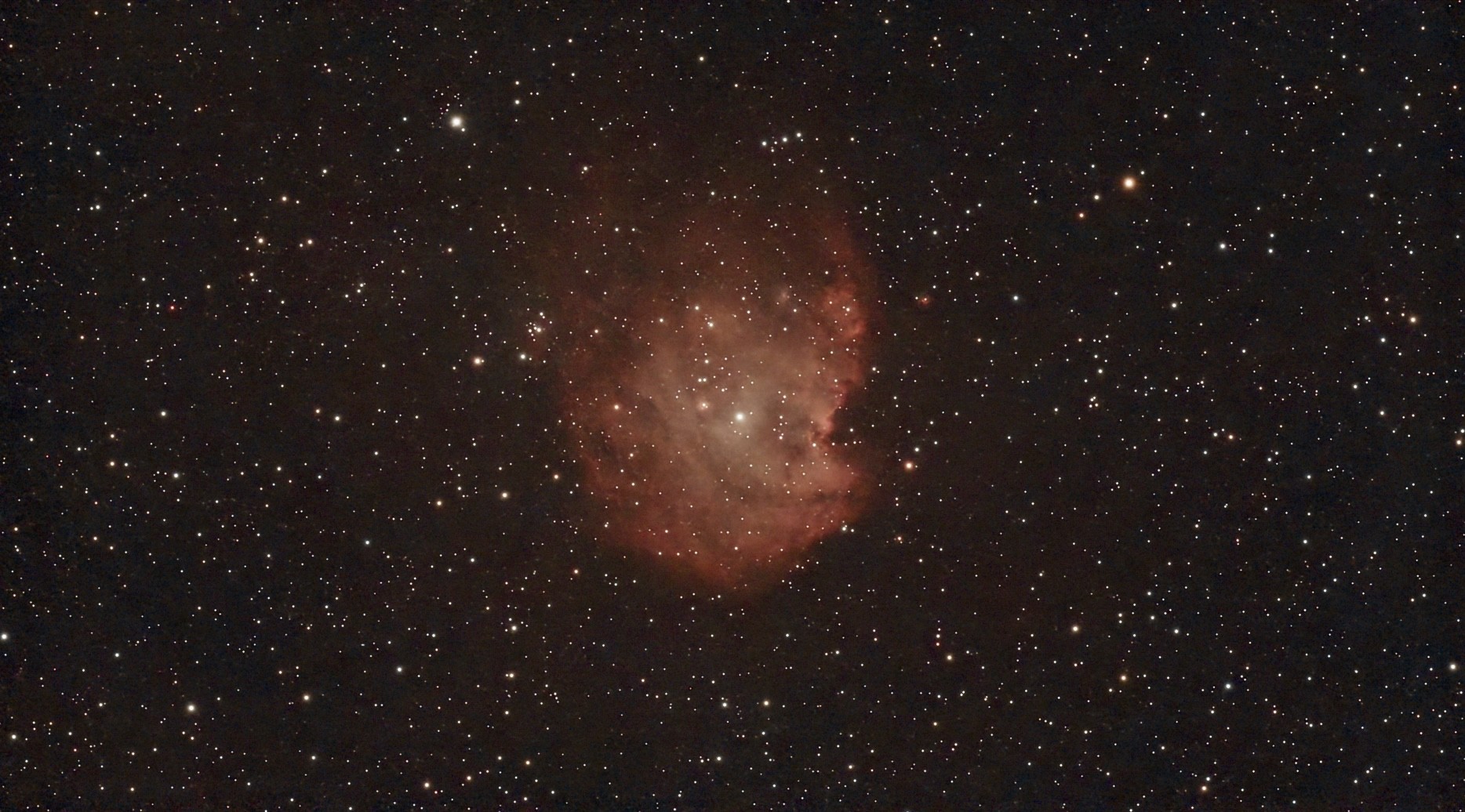
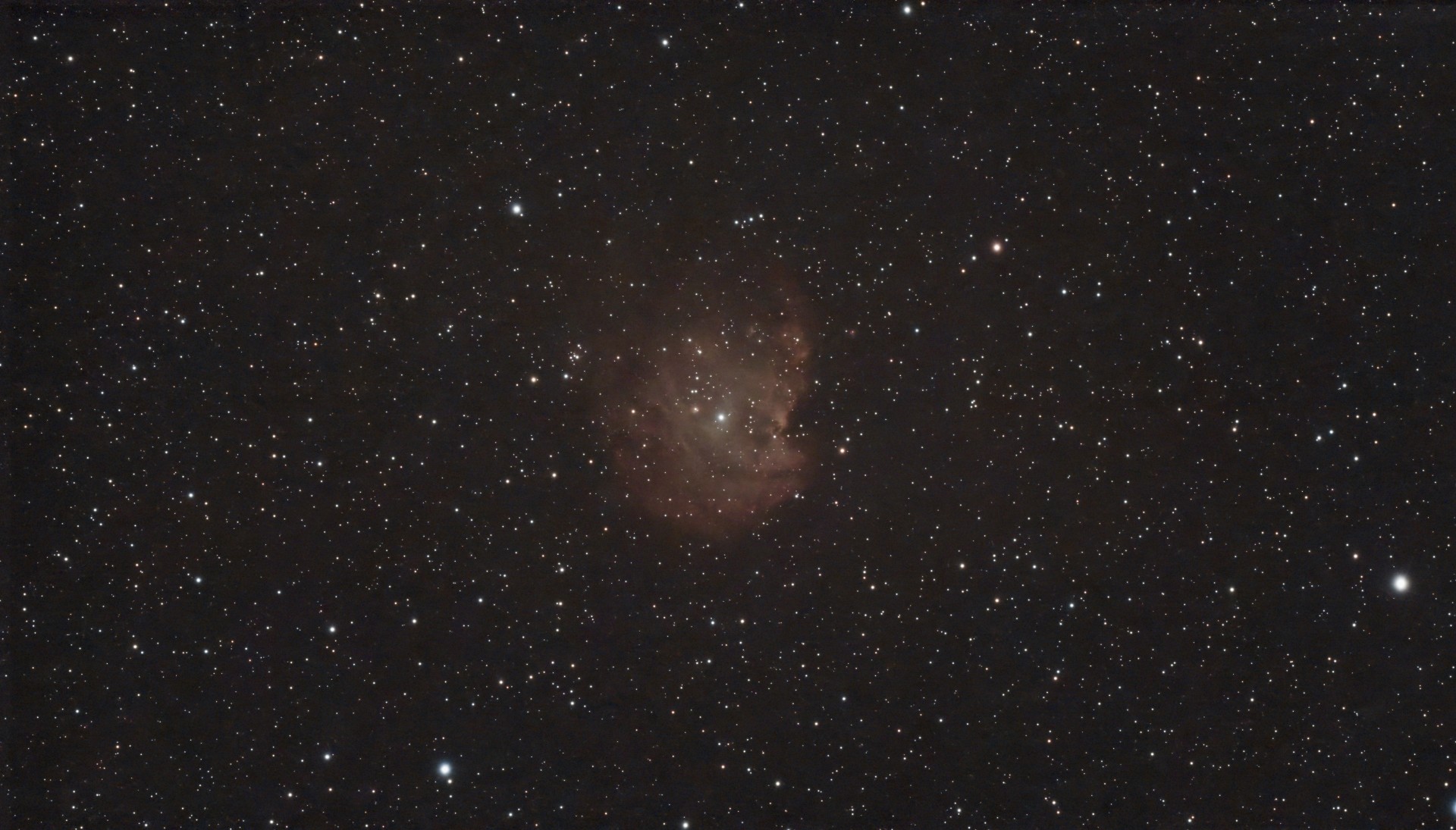
DWARF 3
DWARF Mini
50 / 50
By the Numbers
Key optical and sensor differences between the two scopes on this capture.
| Spec | DWARF 3 | DWARF Mini |
|---|---|---|
| Aperture | 35mm | 30mm |
| Focal ratio | f/4.3 | f/5 |
| Equiv. focal length | 737mm | 1,016mm |
| Image sensor | Sony IMX678 STARVIS 2 | Sony IMX662 |
| Resolution | 8.3MP (3840×2160) | 2MP (1920×1080) |
| Pixel size | 2.0µm | 2.9µm |
| Filters | VIS · Astro · Dual-Band | Dark-Frame · Astro · Dual-Band |
| Weight | 1.3kg | 840g |
| Field of view | 2.9° × 1.7° | 2.4° × 1.2° |
| Filter used | Dual-Band (Hα / OIII) on both | |
What the Images Show
What to look for as you drag the slider.
DWARF 3
Wider field, more context
- Larger field of view captures more surrounding star field
- Higher resolution sensor means more pixels on the final image
- Slightly more light-gathering with the larger 35mm aperture
- Better choice for large extended targets and mosaic work
DWARF Mini
Tighter crop, richer colour
- Longer equivalent focal length fills the frame with the nebula
- Larger 2.9µm pixels capture more light per pixel — stronger signal
- Richer Hα colour visible in the nebula structure
- Weighs 460g less — faster to deploy for quick sessions
DWARF 3 Smart Telescope
Get the DWARF 3 →
The more capable all-rounder. Higher resolution, wider field, and dual wide-angle lens for panoramas and star trail work.
Affiliate link — I earn a small commission at no extra cost to you.
DWARF Mini Smart Telescope
Get the DWARF Mini →
The grab-and-go companion. Genuinely pocket-sized at 840g, with triple built-in filters and EQ tracking in a fraction of the footprint.
Affiliate link — I earn a small commission at no extra cost to you.